Six of Cups
General
Upright: Nostalgia, childhood memory, or a simple, uncomplicated kindness — looking backward with warmth rather than pain.
Reversed: Being stuck in the past, or nostalgia that's preventing you from living in the present.
Love
Upright: A relationship with roots in the past — a reunion, or a partner who feels familiar in a good way.
Reversed: Comparing a current relationship unfavorably to an idealized past one.
Career
Upright: A return to familiar, comfortable work, or a mentor from your past reentering the picture.
Reversed: Relying on outdated methods because they're familiar rather than because they still work.
Money
Upright: A financial gift or return connected to your past — an old debt repaid, an inheritance.
Reversed: Overspending driven by nostalgia rather than present need.
Health
Upright: A simple, familiar self-care practice from your past serving you well again now.
Reversed: Old health habits (not necessarily good ones) resurfacing out of familiarity.
Decisions
Upright: The comfortable, familiar option is genuinely a good one here — no need to overthink it.
Reversed: Choosing familiarity purely out of nostalgia rather than because it still fits.
Deeper Meaning
Symbolism
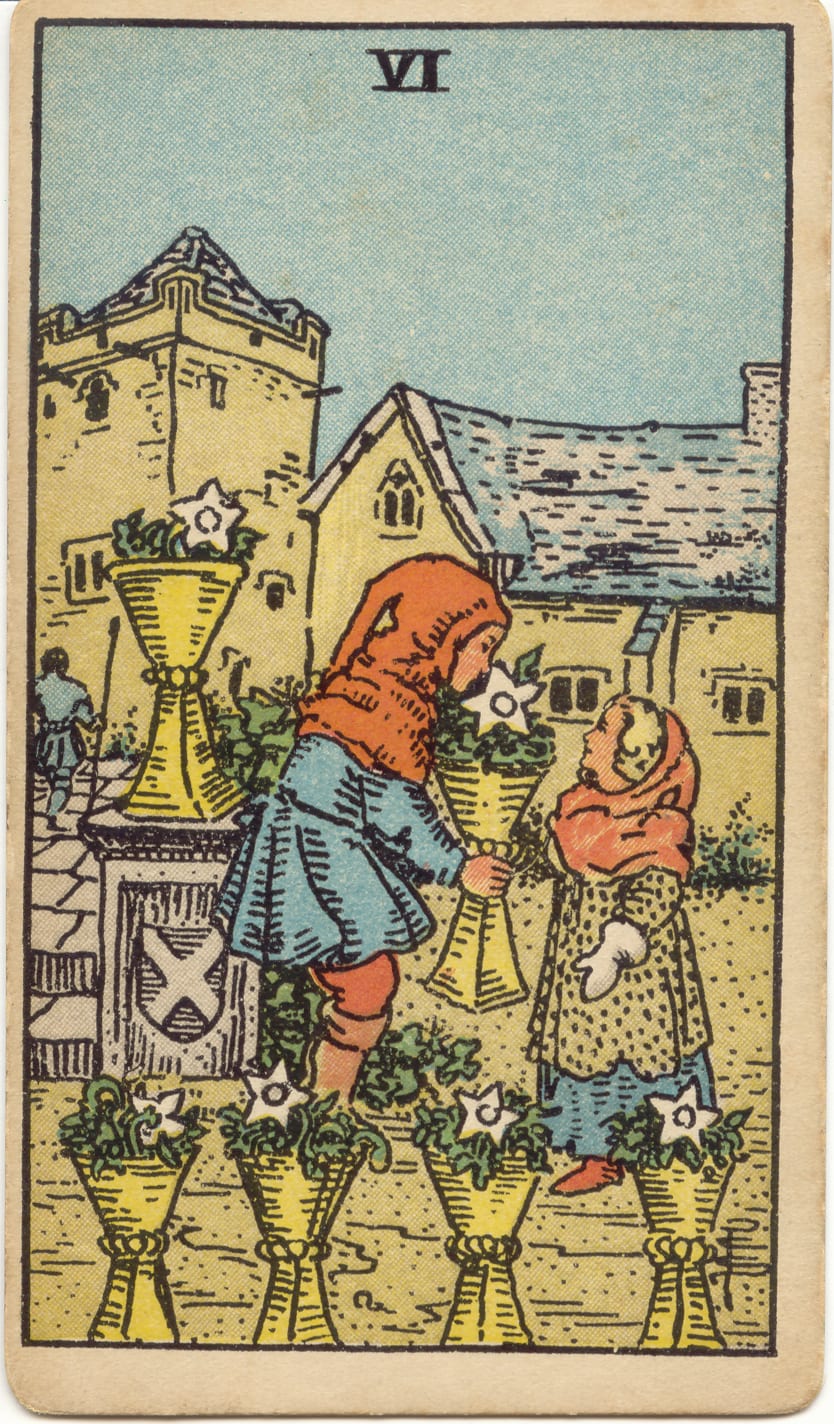
A child offers a cup filled with flowers to a smaller child in a quiet garden courtyard — a scene of innocence, simple kindness, and connection to childhood, without any of the drama found in other Cup scenes.
Correspondences
Numbered 6, the number of harmony following disruption — a return to balance, here specifically through memory and simplicity. Associated with the later Scorpio decans in some systems, moving toward a gentler resolution.
Waite's Reading
Waite reads this straightforwardly as a card of 'the past and its associations' — memory, childhood, and things that belong to an earlier and simpler time, read favorably rather than as regression when it appears well-aspected.
Combinations
Beside The Hierophant, both cards can reinforce a theme of tradition and inherited comfort. Near The Tower or Death, the nostalgia here may be a retreat from a present disruption rather than genuine contentment.