Knight of Pentacles
General
Upright: Slow, steady, reliable progress — unglamorous but dependable, favoring routine over risk.
Reversed: Stubbornness or excessive caution stalling progress that actually needs momentum.
Love
Upright: A dependable, unhurried partner or approach to relationships — steady rather than exciting.
Reversed: A relationship stuck in a rut from excess caution or resistance to change.
Career
Upright: Methodical, reliable work ethic that builds trust and steady advancement over time.
Reversed: Being so cautious or routine-bound that opportunities for growth are missed.
Money
Upright: Slow and steady financial planning — unglamorous but genuinely effective.
Reversed: Overly rigid financial habits that don't adapt when circumstances change.
Health
Upright: Consistent, patient routine building real, lasting physical results.
Reversed: A health routine stuck in a rut, resistant to needed change.
Decisions
Upright: The slow, careful, methodical option is the right one here.
Reversed: Check whether caution has tipped into simple stubbornness.
Deeper Meaning
Symbolism
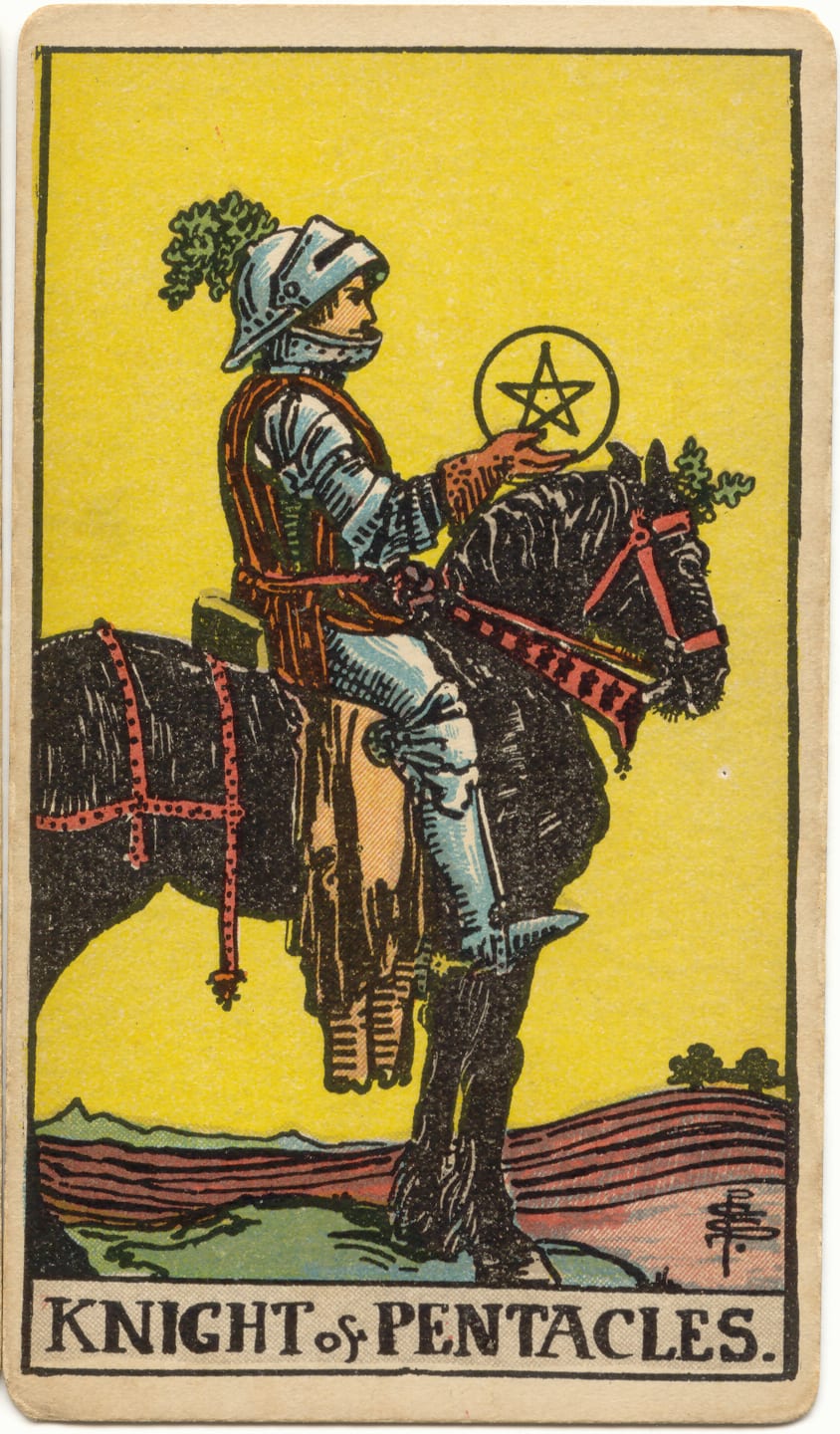
Alone among the four Knights, this one sits perfectly still astride a similarly motionless, heavy black horse in a plowed field — deliberate stillness and patience rather than any of the other Knights' more dynamic postures, emphasizing endurance over speed.
Correspondences
Knights traditionally represent mature, active movement of the suit's energy. This Knight embodies Earth's slow, methodical, dependable expression — patience and routine rather than impulsive drive.
Waite's Reading
Waite reads this Knight's stillness as 'utility, serviceableness' and notes he is 'without impulsiveness of any kind' — for Waite this is deliberately the least dramatic of the four Knights, and that restraint is precisely the card's virtue: dependability that doesn't need to announce itself.
Combinations
Beside Eight of Pentacles, both cards reinforce steady, patient, skilled effort. Near Knight of Wands, the contrast between this Knight's stillness and that one's impulsive speed is instructive for readings weighing pace of action.